
By: Yale School of Nursing
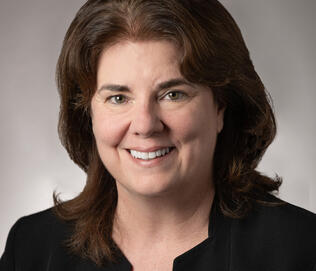
Maureen Scanlan brought something extra with her to every class—34 years of experience, first as a clinical nurse and then as a nursing leader. Today, she serves as senior vice president and chief nurse executive of New York City’s Montefiore Einstein 10-hospital system.
On May 16, she will receive her Doctor of Nursing Practice degree. Her doctoral project, a multi-component, systems-level initiative, examined the use of experienced senior nurses as “Legacy Mentors” to strengthen workforce stability and promote knowledge transfer for early-career nurses. Her findings highlight senior mentorship as a critical workforce stabilization strategy that enhances engagement and retention across the nursing workforce.
“Pursuing my doctoral degree has been a journey—an exciting, challenging, engaging journey that I took along with about a dozen classmates. I made it with the support of YSN faculty, staff, family, and friends.”
Born in New York, Scanlan earned her BSN and MSN degrees from the College of Mount Saint Vincent. Throughout her educational journey, she benefited from strong and sustained support from her parents and extended family, which included nurses.
Her talent and vision were recognized through a progression of executive positions. As nursing has grown more complex in recent decades, Scanlan has had a unique vantage point on the critical role education plays in preparing nurses for expanding responsibilities.
“Today’s nurses have a far different role in the healthcare system and in patient care than they did when I started out,” says Scanlan. “They have more responsibility, more knowledge to master, and a greater need to be decision makers as well as collaborators on interdisciplinary teams.
“They also have many new and exciting opportunities, including research, management, independent practice, policymaking, and entrepreneurship in healthcare and healthcare-adjacent fields. Nursing education prepares the next generation of nurses for all these possibilities.”
Scanlan graduates from the Executive Healthcare Leadership, Systems, and Policy DNP program at Yale School of Nursing, one of the nation’s leading executive systems leadership doctoral programs for nurses.
“YSN offered the right program, at the right time, delivered in a flexible format that made my participation possible,” she says. “It was a great experience interacting with and learning from my cohort colleagues. Between us, we brought a variety of backgrounds, experiences, and knowledge to every discussion.
“One of the most valuable lessons I’ve learned from both my job and my nursing education is that if you want to maximize your effectiveness, you can never stop learning—formally and from your colleagues.”
“The doctoral degree, like all nursing education, is both an end and a beginning,” Scanlan adds. “There is an inevitable gap between preparation and application. Experience provides the knowledge and context over time to bridge that gap and make the most effective and creative use of what you learn in the classroom.”
Her doctoral advisor, Dr. Joan Kearney, chair of the Post-master’s DNP Programs, noted Scanlan’s unique combination of intelligence, vision, and decisiveness balanced with thoughtfulness and reflection, congratulating her as she joins the ranks of the nation’s top doctorally prepared nurse leaders.